Carlo Friedrich · 24 September 2026
Strategies for Sustaining Search Rankings Through Incremental API Layer Enhancements in Enterprise Migrations
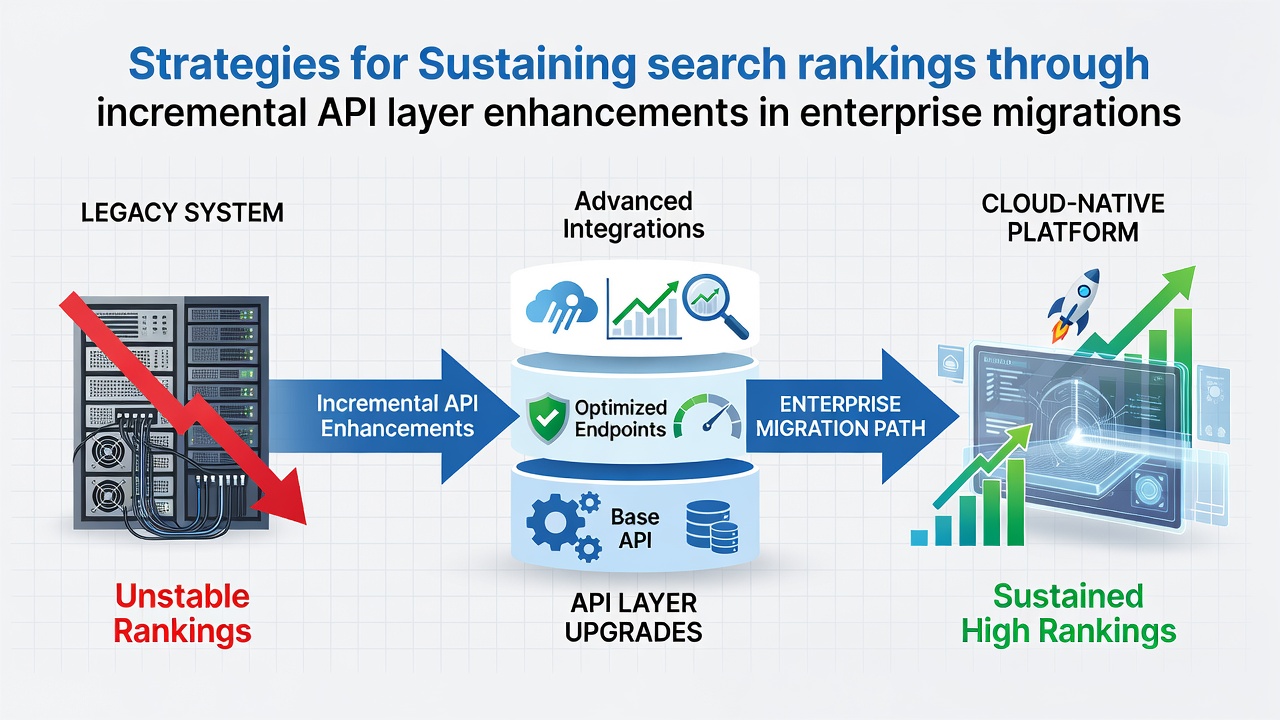
Enterprise migrations often involve complex backend overhauls that risk search visibility when core systems shift without careful coordination, yet organizations address this by applying incremental API layer enhancements that allow testing and adjustments at each stage. Research indicates these methods help preserve indexing signals and crawl efficiency because gradual updates minimize sudden changes to content delivery paths. Observers note that companies which break API modifications into smaller segments report fewer disruptions in organic performance metrics during transitions that span multiple quarters.
Understanding API Layers in Migration Contexts
API layers serve as intermediaries between databases, content management tools, and front-end applications, so modifications here directly influence how search engines access and interpret site data. When enterprises migrate from legacy infrastructure to modern platforms, they encounter risks if entire API sets update at once because indexing patterns can fluctuate without warning. Data shows that phased enhancements, introduced over weeks or months, permit continuous monitoring of response times, error rates, and structured data outputs that affect ranking factors. Those who study digital transitions find that maintaining consistent API versioning during these steps supports stable sitemap generation and reduces the chance of duplicate content issues emerging.
Phased Implementation Approaches
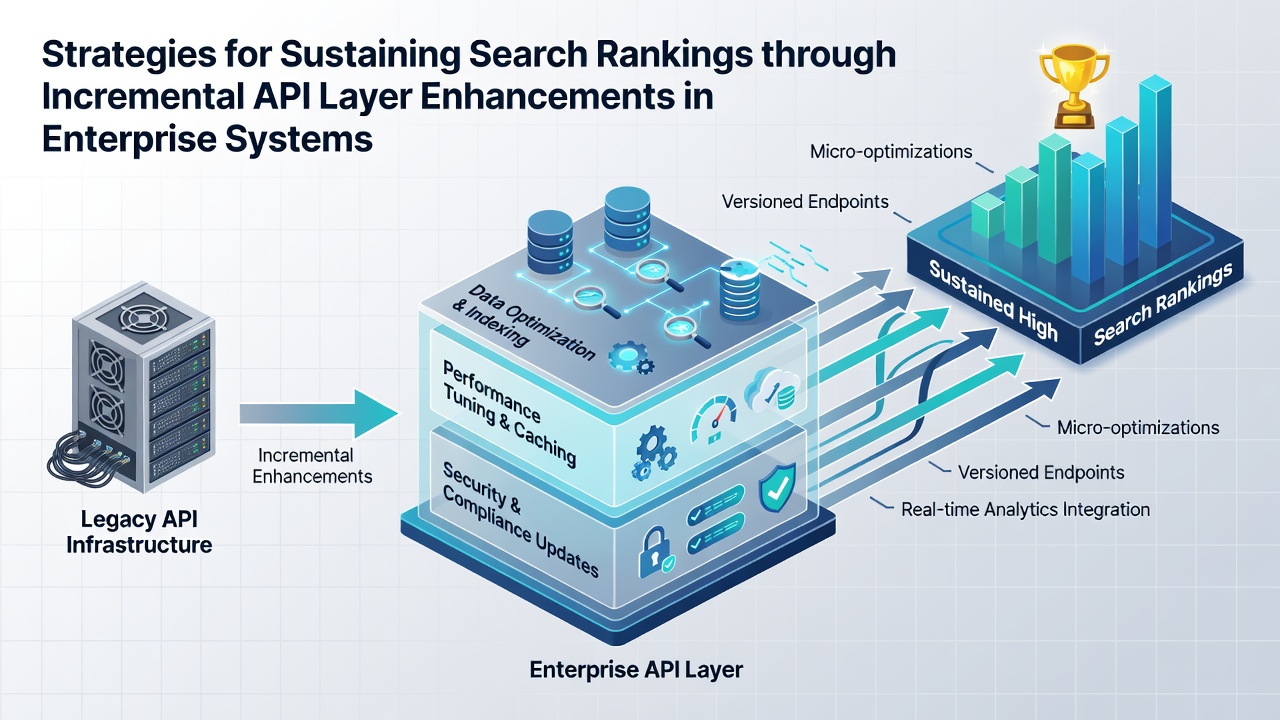
Teams typically begin with isolated API endpoints that handle non-critical functions before expanding to core search-related features such as metadata retrieval and pagination logic. This sequence allows validation against live traffic samples while older layers remain operational in parallel environments. According to figures from industry reports on technology adoption, organizations using staged rollouts achieve higher retention of pre-migration keyword positions compared with full-cutover methods. Experts have observed that incorporating automated regression checks at each increment helps identify crawl anomalies early, and integration with analytics platforms provides real-time visibility into how changes propagate to search console data.
Monitoring and Adjustment Protocols
Continuous tracking becomes essential once enhancements commence because even minor alterations to response formats can influence how algorithms evaluate page quality. Companies deploy synthetic monitoring scripts that simulate crawler behavior alongside actual user sessions to detect shifts in load times or content completeness. Research from academic sources on information retrieval systems reveals that enterprises which correlate API performance logs with ranking fluctuations can isolate variables more precisely than those relying on post-migration audits alone. In September 2026, several documented cases illustrated how mid-cycle API tweaks, guided by these protocols, helped restore visibility after initial drops during large-scale cloud transitions.
What's interesting is how third-party integrations factor into the process since external services often depend on stable API contracts that must evolve without breaking downstream dependencies. Observers note successful projects maintain backward compatibility layers for extended periods, allowing gradual deprecation of outdated calls while new endpoints take over search-critical functions. This approach reduces the likelihood of temporary content gaps that search engines might interpret as quality declines.
Case Examples from Recent Transitions
One manufacturing firm migrating its global inventory systems applied API enhancements in four distinct phases over nine months, and analysts recorded that organic impressions remained within five percent of baseline levels throughout the period. Another organization in the financial sector used containerized API deployments to test enhancements in isolated namespaces before promoting them to production, which permitted quick rollbacks when minor indexing inconsistencies appeared. Those who've examined these migrations highlight that documentation updates and internal training on new endpoint behaviors play supporting roles in sustaining performance because teams need clear reference points to avoid configuration drift.
Integration with Broader SEO Practices
API layer work aligns closely with existing technical SEO routines such as schema markup maintenance and canonical tag consistency because changes at the data-access level can inadvertently affect how these elements render. Studies from research institutions across multiple regions show that enterprises combining incremental API work with regular crawl budget audits experience smoother ranking trajectories than those treating migrations as isolated IT projects. Links to authoritative guidance on digital infrastructure, including resources from the European Commission on technology transitions, provide frameworks that teams adapt to their specific API strategies. A separate report issued by Innovation, Science and Economic Development Canada outlines metrics for measuring system stability during upgrades that directly relate to search visibility outcomes.
Conclusion
Incremental API layer enhancements offer enterprises a structured path through migrations that prioritizes continuity in search performance by limiting the scope of each change and enabling ongoing measurement. Organizations that embed monitoring checkpoints and maintain compatibility measures throughout the process position themselves to navigate transitions with reduced volatility in organic rankings. Evidence from completed projects demonstrates that this methodical approach supports both technical reliability and sustained visibility when executed with attention to data flows and indexing signals.