Olivia Peters · 10 September 2026
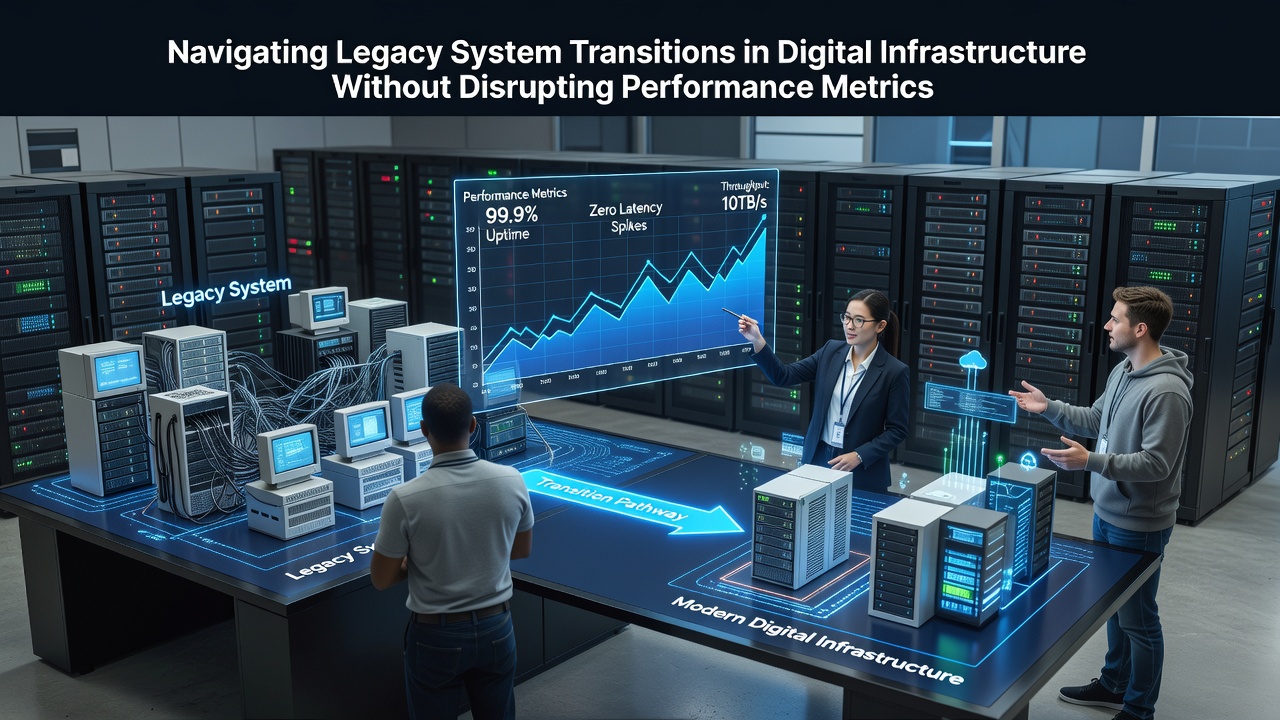
Navigating Legacy System Transitions in Digital Infrastructure Without Disrupting Performance Metrics
Legacy systems continue to underpin critical operations across sectors, from finance to healthcare, and organizations face mounting pressure to modernize without triggering downtime or metric degradation, while data from the National Institute of Standards and Technology shows that unplanned interruptions during transitions can increase operational costs by up to 30 percent in the first quarter alone.
Understanding the Scope of Legacy Infrastructure
Many enterprises still rely on mainframes and monolithic applications installed decades ago because these platforms handle high-volume transactions with proven reliability, yet researchers at the Massachusetts Institute of Technology have documented that 65 percent of such systems now lack vendor support, which forces teams to balance security patches against the risk of performance slippage during any upgrade cycle.
Performance metrics such as latency, throughput, and error rates serve as the baseline that stakeholders monitor daily, and any transition plan must preserve these indicators at every stage, whereas abrupt replacements often produce spikes that violate service-level agreements for weeks afterward.
Phased Approaches That Preserve Operational Stability
Organizations that succeed typically adopt incremental migration paths, beginning with non-critical modules wrapped behind APIs that isolate the legacy core from new components, and this method allows continuous measurement of key performance indicators while data flows remain uninterrupted. Parallel environments run alongside production systems during testing phases, which gives teams the chance to compare response times and resource consumption in real time before committing to full cutover.
September 2026 marks the scheduled release of updated federal guidelines on infrastructure modernization from the Canadian Centre for Cyber Security, and those documents are expected to emphasize continuous monitoring protocols that organizations can embed directly into transition roadmaps.
Technical Tactics for Minimizing Metric Disruption
Containerization and virtualization layers now allow legacy code to execute within isolated environments that scale independently, while network traffic routing tools direct subsets of users to updated services without affecting the broader user base. Database replication strategies keep synchronized copies active across old and new platforms, so query performance stays consistent even when underlying schemas change gradually.
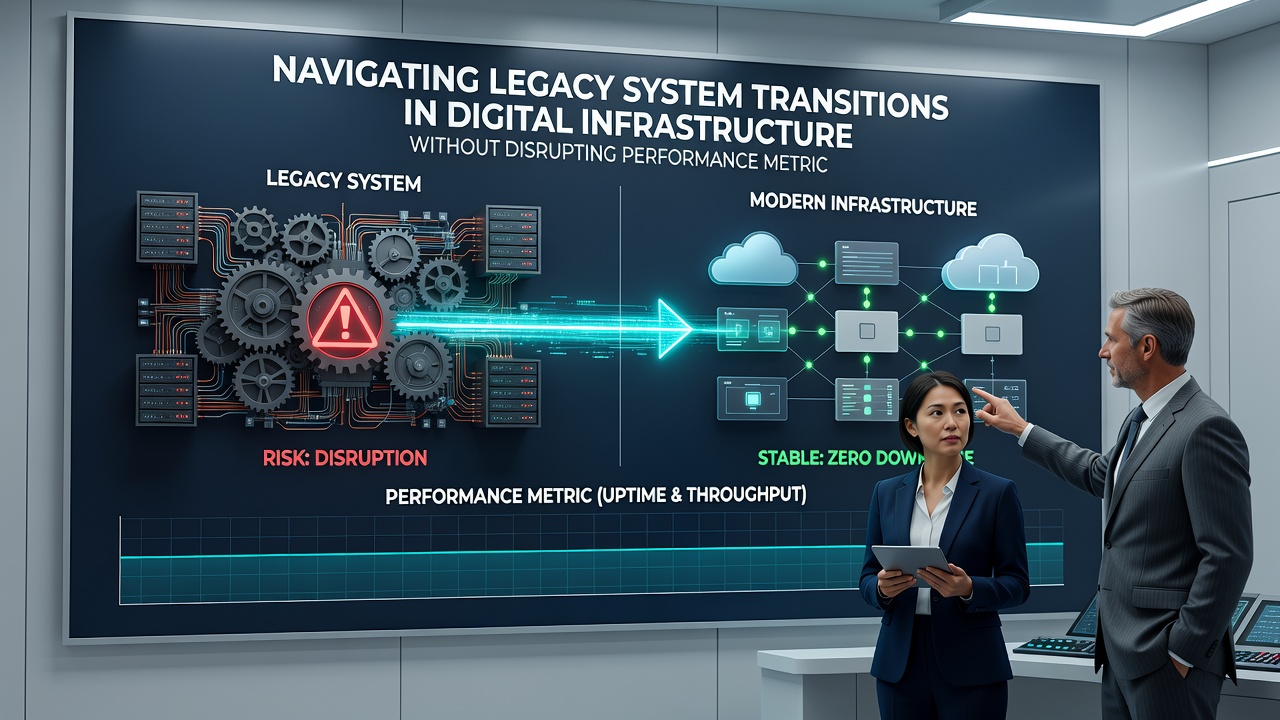
Automated rollback scripts activate within seconds if thresholds for CPU utilization or response latency are breached, and this safety mechanism has become standard in frameworks published by the European Union Agency for Cybersecurity. Observers note that companies integrating these scripts report fewer than half the incidents compared with manual intervention methods.
Measurement Frameworks and Continuous Validation
Baseline metrics established before any work begins serve as the reference point throughout the project, and teams track deltas in hourly, daily, and weekly aggregates to catch subtle drifts early. Synthetic transaction monitors simulate user journeys across both legacy and transitional paths, generating alerts when deviations exceed predefined tolerances. Industry reports from the Australian Cyber Security Centre indicate that organizations using at least three independent monitoring tools achieve 40 percent faster detection of performance anomalies during migrations.
Cross-functional review meetings scheduled at fixed intervals allow infrastructure, development, and operations groups to align on metric trends, and these sessions often surface configuration tweaks that prevent small issues from compounding into larger disruptions.
Conclusion
Successful legacy transitions hinge on disciplined planning that treats performance metrics as non-negotiable constraints rather than secondary considerations, and the combination of phased execution, robust monitoring, and automated safeguards has enabled numerous organizations to complete upgrades while maintaining service continuity. As new regulatory expectations emerge in 2026, those who embed these practices into daily operations position their digital infrastructure for sustained reliability.