Carlo Otto · 8 October 2026
Leveraging Event-Driven Architectures to Enhance Real-Time Decision Making in Tech Platforms
Event-driven architectures have gained traction in tech platforms because they allow systems to react immediately to changes rather than relying on scheduled polling or batch processing. Researchers at various institutions have documented how these setups route events through message brokers so downstream services can trigger actions without tight coupling. Data from industry reports shows that platforms handling high volumes of user interactions often see reduced latency when shifting from request-response models to event streams.
Core Components of Event-Driven Systems
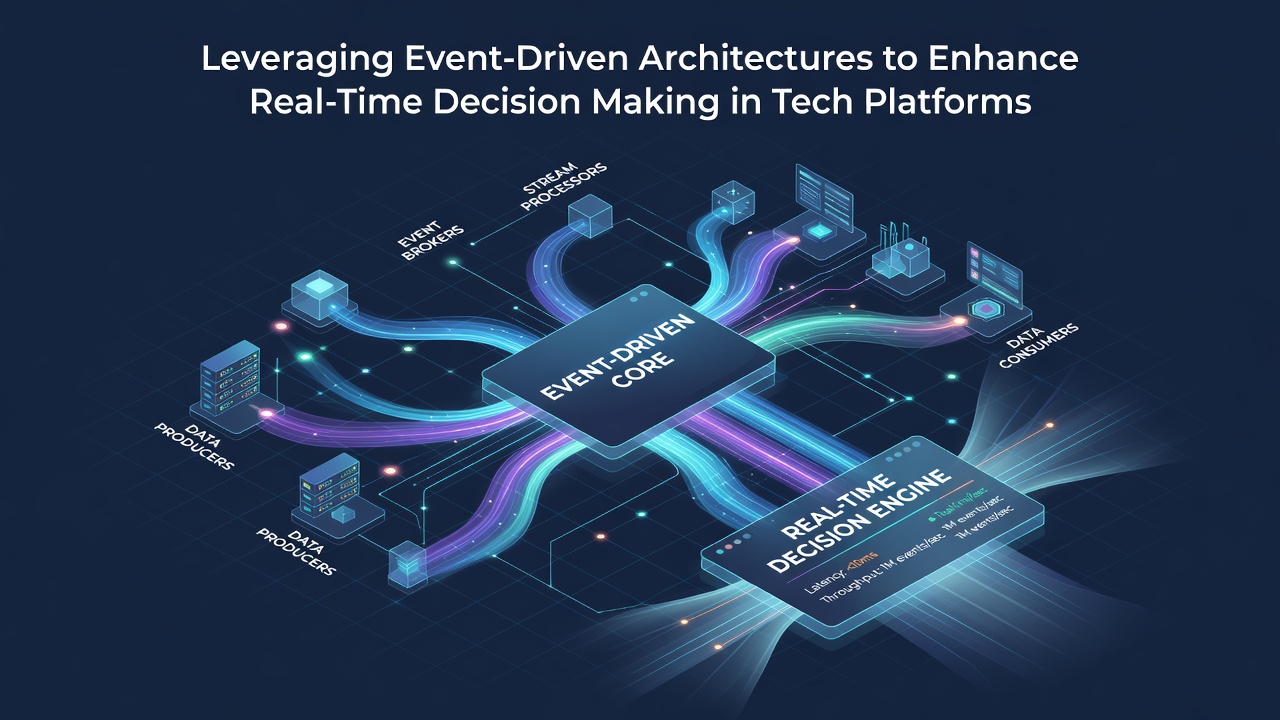
At the foundation sit event producers that publish notifications whenever state changes occur, while consumers subscribe to relevant topics and process those messages asynchronously. Brokers such as Apache Kafka or RabbitMQ manage the flow, ensuring durability and ordering where required. Observers note that this separation lets development teams scale individual components independently, and studies from academic sources confirm improved throughput in distributed environments compared with monolithic alternatives.
Real-time decision making benefits directly because events carry context like timestamps and payloads that decision engines can evaluate on arrival. When a payment transaction completes, for instance, fraud detection services receive the event instantly and apply rules without waiting for the next query cycle. Figures from platform operators reveal that such immediate processing cuts response times from seconds to milliseconds in many production deployments.
Implementation Patterns in Production Environments
Many organizations adopt the event sourcing pattern, where every state change becomes an immutable event stored in a log that serves as the source of truth. This approach enables replay capabilities for debugging and auditing, and one engineering team at a major e-commerce platform reported that event logs helped reconstruct user sessions after partial outages. Another common pattern involves CQRS, separating read and write models so that decision services query optimized views built from event streams.
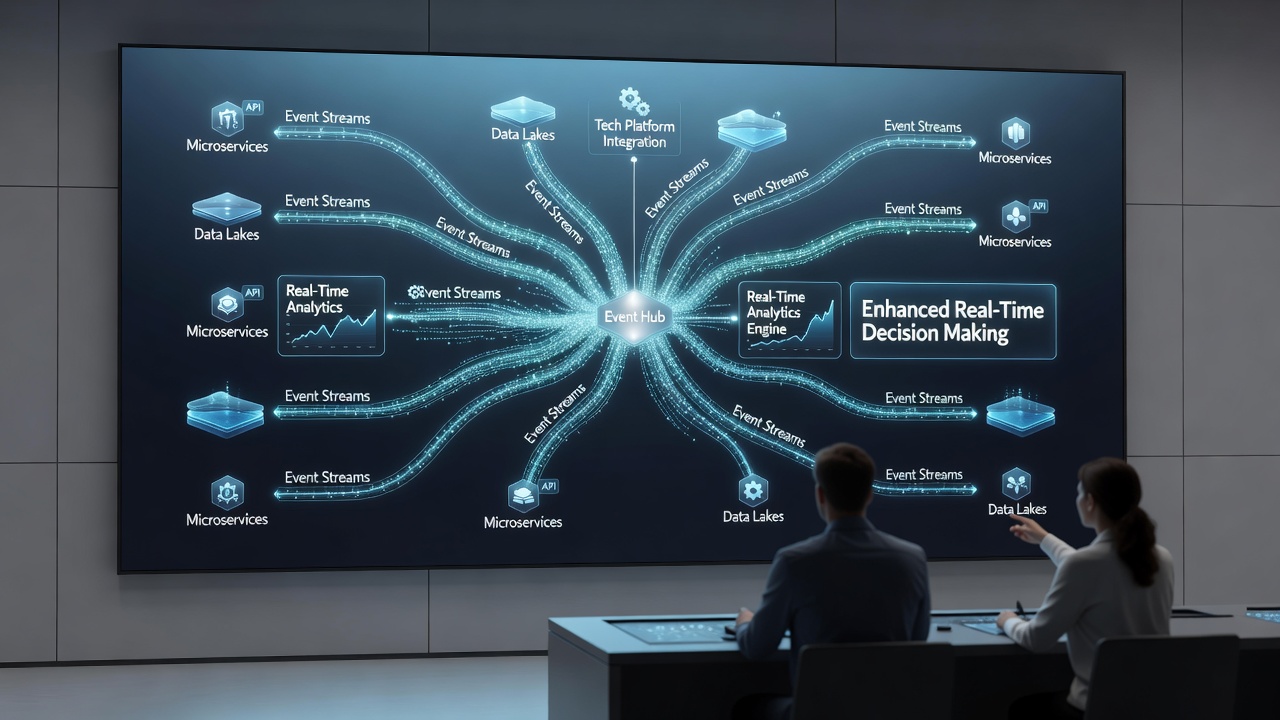
Integration with machine learning pipelines has expanded the scope of these architectures. Events feed feature stores that update model inputs continuously, allowing platforms to adjust recommendations or pricing dynamically. Research published by the National Institute of Standards and Technology highlights measurable gains in accuracy when models train on fresher data streams rather than periodic snapshots.
Performance Metrics and Scalability Observations
Benchmarks collected across cloud providers indicate that event-driven setups handle traffic spikes more gracefully because consumers can scale horizontally based on queue depth. A report from an Australian research consortium found that platforms using these methods sustained 99.9 percent uptime during peak events in 2025, with decision latency averaging under 50 milliseconds. Yet configuration matters, and misaligned partitioning strategies can create hotspots that degrade performance.
Security considerations include encrypting event payloads and managing access through topic-level policies. Regulatory bodies in the European Union have issued guidance on data handling in distributed event systems, emphasizing traceability from source to decision outcome. Those requirements align with audit trails that event logs naturally provide.
Challenges Encountered During Adoption
Teams transitioning to event-driven models often face consistency questions because distributed transactions become harder to coordinate. Sagas and compensating transactions address some of these issues, but they require careful design. Observers have documented cases where duplicate event processing led to incorrect decisions until idempotency keys were introduced systematically.
Monitoring grows more complex as events travel across multiple services. Tools that trace event lineages help surface bottlenecks, and data collected in October 2026 from several large deployments showed that comprehensive observability reduced mean time to resolution by approximately 30 percent. Testing also shifts toward contract testing between producers and consumers rather than end-to-end UI tests alone.
Future Directions and Emerging Practices
Advances in serverless event triggers continue to lower the barrier for smaller teams to adopt these patterns. Cloud vendors now offer managed brokers with automatic scaling, and integration with edge computing nodes extends real-time decisions closer to data sources. A study conducted by researchers at the University of Toronto examined how event-driven coordination improved resource allocation in multi-region setups, revealing consistent improvements in cost efficiency under variable load.
Standardization efforts around event schemas and metadata have progressed, with industry groups publishing common formats that reduce integration friction. Platforms that adopt these standards report faster onboarding of new services and fewer schema-related outages. Continued investment in tooling for schema evolution and versioning supports long-term maintainability.
Conclusion
Event-driven architectures provide a foundation for platforms that require timely responses to changing conditions. The combination of decoupled services, durable event logs, and scalable processing supports decision systems that operate at the speed of incoming data. As platforms continue to integrate machine learning and expand across regions, the patterns established in these architectures offer a structured path for maintaining responsiveness without sacrificing reliability. Organizations evaluating such transitions can draw on documented case studies and performance data to inform their implementation roadmaps.